Random Blog Clay Feet
Feel free to leave your own comments or questions. If you would like to be in contact with me without having it published let me know in your comment and leave your email address and I will not publish that comment.

Saturday, June 02, 2007

Inhibitions to Celebration

Now all the tax collectors and the sinners were coming near Him to listen to Him. Both the Pharisees and the scribes began to grumble, saying, "This man receives sinners and eats with them."

So He told them this parable, saying, "What man among you, if he has a hundred sheep and has lost one of them, does not leave the ninety-nine in the open pasture and go after the one which is lost until he finds it? "When he has found it, he lays it on his shoulders, rejoicing. "And when he comes home, he calls together his friends and his neighbors, saying to them, 'Rejoice with me, for I have found my sheep which was lost!' "I tell you that in the same way, there will be more joy in heaven over one sinner who repents than over ninety-nine righteous persons who need no repentance.
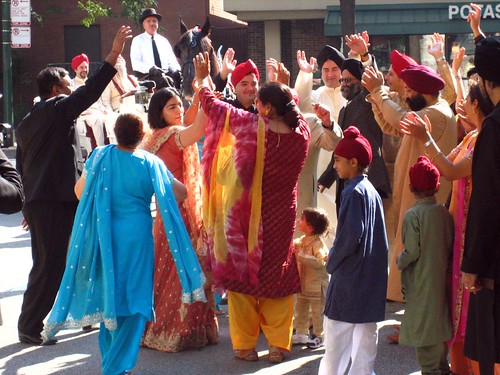
"Or what woman, if she has ten silver coins and loses one coin, does not light a lamp and sweep the house and search carefully until she finds it? "When she has found it, she calls together her friends and neighbors, saying, 'Rejoice with me, for I have found the coin which I had lost!' "In the same way, I tell you, there is joy in the presence of the angels of God over one sinner who repents."

And He said, "A man had two sons.... "So he got up and came to his father. But while he was still a long way off, his father saw him and felt compassion for him, and ran and embraced him and kissed him. "And the son said to him, 'Father, I have sinned against heaven and in your sight; I am no longer worthy to be called your son.' "But the father said to his slaves, 'Quickly bring out the best robe and put it on him, and put a ring on his hand and sandals on his feet; and bring the fattened calf, kill it, and let us eat and celebrate; for this son of mine was dead and has come to life again; he was lost and has been found.' And they began to celebrate. "Now his older son... said to his father, 'Look! For so many years I have been serving you and I have never neglected a command of yours; and yet you have never given me a young goat, so that I might celebrate with my friends; but when this son of yours came, who has devoured your wealth with prostitutes, you killed the fattened calf for him.' "And he said to him, 'Son, you have always been with me, and all that is mine is yours. 'But we had to celebrate and rejoice, for this brother of yours was dead and has begun to live, and was lost and has been found.'" (Luke 15:1-32)

I have no stomach right now to launch into a theological propounding of the assumptions to be drawn from this much-studied text – at least not from the intellectual side stripped of the real heart functions illustrated in these stories. Right now I want to internalize what my heart wants to experience that is so well expressed by some of these key phrases and words that for most of my life have been almost totally foreign to me.

I started thinking this morning about reactions that I have observed and experienced in relationship to different events involving “good news” that someone had, something that they were excited about and wanted to share their excitement with others. As I sat down to write out my thoughts and explore them further one of my daughters asked me what I was writing about so I shared with her what I was about to unpack. She then began sharing with me her perspective and thoughts about this which I must give credit to for much of what I am sharing.

Let me back up and explain what I shared with her as we started discussing this idea of celebrating with someone else. A day or two ago I mentioned to someone special in my life that I was talking to on the phone that I was repairing my boat. In my heart I was hoping that they would share my excitement at the prospect that soon we would be able to have it available to make more great memories together having fun on the lake with friends. But instead they reminded me of their disappointment in me that I had not done it much sooner so they could enjoy it over Memorial day weekend with their friends.

I realize that it would be completely useless to try to justify myself or rehearse my explanations as to why I wan not able to do it sooner due to various financial and time restrictions. It was simply viewed as a personal slight to them, a disregard for their desires, that I did not care about them as much as I claimed. This caused me a little internal pain, but I refused to allow it to cloud my affection for them. It was more that I realized we had missed yet another opportunity for bonding through the function of celebration. It also reminded me painfully that this pattern has been a well-recognized habit in my own life as I have missed thousands of opportunities to enter into other people's joy without reservation, self-pity or jealousy.

The second thing that I related to my daughter this morning was about her own experience she is having right now. We drove to Michigan last night so that she could pick up the car that she had put a deposit on about a week ago. She has been so excited about finding this car for such a good price. It is in nearly mint condition, well taken care of by its owner and is one of the best brands on the market. It fits her personality perfectly and after we picked it up and drove to another daughter's house to spend the night she did not want to quite driving it she was enjoying it so much. All evening she could not contain her excitement over her new “toy” as the little kid in her reveled in delight over her new car. I have accompanied her over the past few weeks on some of her various forays to find a car. We have been to a big car auction and have checked out cars from ads in the paper. She was determined to not accept anything less than what met her quite high expectations in a car that baffled most of the people around her. But I wanted to respect her individuality so I encouraged her to keep looking until she was satisfied. When she found this car she was not only happy with the car but was thrilled that the owner was a person that she could connect with as well on a deeper level than strictly business. The lady had come over from Czechoslovakia to this country to follow her desire for adventure and was living out her dream. She had been very happy with this car and was even quite sad to see it go, but she was also looking forward to getting a brand new car that was even better whenever she could make up her mind which one to choose.

As I went through these events with my daughter and observed her bubbling excitement over her new purchase, I have to admit that a little jealousy stirred up inside of me. I tried to check it at once and not allow it to spoil her enthusiasm but I was still aware of it and maybe even allowed it to influence my jokes with her about her new car. Internally I struggled as to how to relate to this negative emotion without just trying to repress it. As I did so I realized that it has roots far back in my life when it was trained into my psyche that celebration was not acceptable and joy was virtually an unknown in my heart. I have not really learned by experience how to enter into joy with other people uninhibitedly. I feel cheated in this area and even jealous of people who can connect with others in celebrating their joys as well as sharing with them in their sorrows or pain. That is what I want to be like and I am impatient to get there.

Anyway, I shared the two events in brief with my daughter this morning and the emotions that they evoked in me and we discussed them for a few minutes. I told her that I want to learn how to fully share her elation with her as much as I can so I can reinforce and amplify her joy. This is the bonding process that takes place in true community and since the family God has put together with our lives is the community that I live in I want to better relate to them and learn to celebrate with them. “Learn” is the operative word here, and while my heart certainly would love to celebrate on many occasions my mind is still so full of fear and inhibitions that it often blocks the free expression of my heart's desires.

As we talked about these things a few root ideas began to condense in my mind. One is that self-pity spoils joy-sharing. That is usually present due to a lack of maturity more than a sense of malice or ill-will. How often opportunities to celebrate with others are missed or contaminated by my own self-pity that “good things only happen to other people”. This is a symptom of negative thinking which is a malignant disease that afflicts too many of us.

My daughter shared with me that the way she relates to this problem is to realize that she has a choice to make; she can indulge in self-pity about bad things that have happened to her (and she certainly has plenty of that to reflect on) or she can view them as lessons to contrast with the good things in her life so that she can appreciate them even more by comparison. She reminded me that stuff happens to give me a better perspective of who I am if I am willing to view it that way. She has chosen to look at life through positive lenses in spite of the fact that much of her life has been trashed by many people through whom she should have been nurtured and protected. Then to add insult to injury along come people who think that because of her cheerful, sweet disposition that she must have had it easy all of her life and that she could not possibly relate to anyone else's problems effectively. That is a real source of pain for her sensitive heart, but to me reveals a special beauty in the very unique qualities that God has implanted in her.

Another block to celebrating and rejoicing with others is the problem of jealousy. Jealousy poisons my ability to freely enter into celebration. Jealousy is a very caustic form of selfishness that tears apart emotional bonds and destroys love and affection. I seldom admit to falling victim to this vice but it influences more of my relationships that I may care to imagine. Together jealousy and self-pity are very effective inhibitors that severely limit the depth of my attachments to those that I want to love and cherish. I want to eradicate these selfish traits from my life and live more fully in the atmosphere of heaven described in the above passage where it is just a given assumption that “we had to celebrate and rejoice!”

Emotions are symptoms of the heart. Suppressing emotions represses the heart and makes it impossible for me to freely live from my heart. If I have negative emotions that are causing problems in my life I should not hide from them or try to reinforce them by gathering sympathy for them but I must acknowledge them for what they are, trace them back to the root faults underlying them and then receive the freedom that truth can bring to my soul. That truth is not primarily intellectual though that may be involved in it, but it is a truth that lies at the very foundation of my perception of my identity and my value. When that truth is accepted deep in my experiential memories and pours the healing oil of grace into my wounded, lacerated heart-memories, and when I can receive the fact that God, along with some of His children, is willing and maybe even eager to love me and be with me no matter what I am experiencing, and that that love is not something that I have to earn, then I will be more free and uninhibited to celebrate and rejoice with others and I will enjoy having them do the same with me.

Friday, June 01, 2007

Contrasting Trio in Romans 2

I was not intending to write anything this morning due to lack of time but I cannot allow this to slip by and be potentially forgotten. I will have to put the various pieces together sometime and see what fascinating picture emerges more clearly.

It seems to me like there might be an important linkage between the trio of attributes in Romans 2:4 describing what we do not take very seriously about God with the directly contrasting attributes produced within ourselves as a result described in verse 8. It does not seem to be a stretch to see a direct contrast between each pair when they are put side by side.

Kindness vs. unrighteousness.

Tolerance vs. wrath.

Patience vs. indignation.

The first trio describes the things about God that when properly appreciated draw us to Him and turn us (repentance) from running away or resisting Him. In a very real sense, when we choose to believe these things about God we obey them by responding to them/Him.

Conversely, when we choose to cling to our lies about God and what He is like we, in fact, obey those lies by becoming them ourselves – by beholding we become changed. This puts a whole new dimension on the word “obey”!

I also find it enlightening in this parallel contrasting trio that kindness is the main description used opposite unrighteousness. I have wondered for years about the word righteousness and it seems that in this context Paul is proposing that kindness is possibly the most pronounced hallmark of that idea. We have heard the word righteousness all of our lives but I suspect it really has not had much real substance in our understanding other than just a very good filler word used in religious phrases. This word “kindness” puts a much more definitive face on the idea of righteousness that we can relate to on a heart level.

I also find it interesting that tolerance is found opposite wrath. But when I think about situations where wrath is displayed invariably there is a lack of tolerance so this really does make sense. So too with patience and indignation. I can't think of a person who portrays indignation who is viewed as being patient. We generally say that that person has run out of patience at that point. We also claim that when God “destroys” sinners He too has run out of patience. Hmmmm.

What do you think?

(next in series)

Thursday, May 31, 2007

Supposed Escape

I must write this down before it escapes me so I can explore it more fully later.

Attachment bonds to things above attachments to people.

Attachments to people above intimacy with God.

Today I looked at Rom. 2:3 “Do you suppose... that you will escape the judgment of God?” This is directed at all of us looking for excuses for our critical words and attitudes. Paul is putting his finger on an underlying supposition that is not apparent to us or it would not need to be exposed. So what is the ingredients of this supposition?

The following verses lay out what composes this supposition. Thinking “lightly” is the first element listed, “not knowing” is the second. And then more descriptive words are used like “stubbornness” and “unrepentant”, “selfishly ambitious” and not obeying the truth but obeying unrighteousness, wrath and indignation.

Now that is very fascinating – obeying wrath and indignation. There certainly is a whole lot to unpack there. That sounds very much like our typical false picture of God; full of wrath and indignation. So when we cling to these false ideas about God we are obeying these false pictures of God mirrored from our soul and displayed in the way we treat others with our critical, condemning spirit.

I need to make use of my daytime hours while it is not raining to get some much-needed repairs done so I will come back to this soon.

(next in series)

Wednesday, May 30, 2007

Risk Everything

Todays' message in My Utmost is descriptive of the experience that my real heart craves to live out. It is the relationship that choose to pursue and the life that I want to live as a witness to attract others to the magnetic beauty of God's character.

Suppose God tells you to do something which is an enormous test to your common sense, what are you going to do? Hang back? If you get into the habit of doing a thing in the physical domain, you will do it every time until you break the habit determinedly; and the same is true spiritually. Again and again you will get up to what Jesus Christ wants, and every time you will turn back when it comes to the point, until you abandon resolutely. “Yes, but – supposing I do obey God in this matter, what about...?” “Yes I will obey God if He will let me use my common sense, but don't ask me to take a step in the dark.”

Jesus Christ demands of the man who trusts Him the same reckless sporting spirit that the natural man exhibits. If a man is going to do anything worthwhile, there are times when he has to risk everything on his leap, and in the spiritual domain Jesus Christ demands that you risk everything you hold by common sense and leap into what He says, and immediately you do, you find that what He says fits on as solidly as common sense.

At the bar of common sense Jesus Christ's statements may seem mad; but bring them to the bar of faith, and you begin to find with awestruck spirit that they are the words of God. Trust entirely in God, and when He brings you to the venture, see that you take it. We act like pagans in a crisis, only one out of a crowd is daring enough to bank his faith in the character of God. (My Utmost for His Highest 5/30)

I think this is a very good description of what real faith looks like. It shows how “works” motivated by real faith will be produced in the life of a person who begins to get an accurate picture on the inside of the truth about God's character. Coming from a background of training that was backwards, I find these kind of explanations very helpful. Most of us who were brought up in a religious environment were probably trained with a great deal of emphasis on having all the right external symptoms. The problem lay in that there was a great deal of confusion and mystery surrounding the underlying reasons and motivations to produce those external behaviors. Usually the motives involved fear to a great degree with a lot of selfishness mixed in quite subtly.

“You must be good if you want to go to heaven (or avoid hell)” was one of the main themes. “You better obey or you will get a spanking (or some other form of arbitrary painful/shameful experience)” was another main mode of motivation. This kind of training did very little to nurture and strengthen our hearts to flourish and thrive. Instead, it created within us an image of a false picture of God that became so real and fearful that we either rejected Him altogether in favor of our more reasonable common sense or we perpetuated the lies as we hid within our fears and attempts to placate this confusing, threatening superpower hanging His inducements and threats over our lives.

Having “faith” in such a being is a very difficult proposition at best. What often happens is that most of our religious words end up getting transposed into meaning something other than their original use. Faith becomes known as an intense, worked-up desire to get something from God that we want and a desperate attempt to eliminate every conflicting thought or doubt that threatens to give God an excuse not to give it to us.

I speak from my own experience in this area but I strongly suspect that I am not the only one who suffers from this systematic theology of lies about God. That is one reason I have so much benefited from reading this book year after year, for it keeps reminding me of what is the most important thing about being human and being truly alive. I am finding that as my internal picture of God becomes more and more consistent with the real truth about Him, that true faith begins to grow spontaneously within me and I am challenged to throw myself in reckless abandon onto what Jesus says about Himself. The courage and reason to do so comes from a heart awakening within me to the alluring call of its original designer who created it to find its highest fulfillment and joy in superseding the common sense of an isolated, left-brained religion and leap into the arms of love. My heart can only find satisfaction in relationships with other hearts. And all of our hearts will never be completely satisfied until they come into full intimacy with the Heart from which they were born and came into existence.

I think I would like to adopt this passage as my personal mission statement, the description of what I want my life to look like. No, better yet, I choose to do that. I want to have an awestruck spirit in the words of God. I want to trust entirely in God, and when He brings me to the venture, see that I take it. I want to be that one out of a crowd that is daring enough to bank his faith in the character of God. I choose to leap into the words of Jesus inviting me to risk everything on who He really is and trust Him to catch me like a little child screaming with glee landing in his father's strong arms.

“Truly, I say to you, If you do not have a change of heart and become like little children, you will not go into the kingdom of heaven.” (Matthew 18:3 BBE)

Tuesday, May 29, 2007

Gearing Up for Romans 2

Romans 1 and 2 are parallel descriptions outlining the two primary ways to be a sinner and resist God. The last half of Romans 1 describes what we usually term “open” sinners who make no profession of obedience to God. Within this description both the causes and the results are explained though they are often confused or switched around by those who read it. Romans 2 then declares that typical “religious” people are actually just another version of the previous sinners though they vehemently deny such charges. This is because they still participate in the root causes indulged in by the chapter 1 sinners but just have very different apparent symptoms.

This parallel is flushed out more clearly in 2:12 where they are described as those who sin without the Law and those who sin under the Law. Then these two modes of being sinners are also contrasted with apparently two ways of obedience inferred in 14-16. These are people who are not under the law, or what we would term overtly religious people, but pay attention to a conscience tuned to the voice of God in their own soul. These kind of people, their very existence and definition, create a great dilemma for most Christian as they do not fit neatly into a box of our defining. We generally agree that they must exist but we do not know very well how to understand them or relate to them. Maybe these are people who have a better intuitive relationship to the cause and effects listed in these two chapters than most overt religious professing “believers”.

I believe that it would be well for me to further explore and condense into more clarity the many causes and effects laid out in these passages. Since it seems to be quite important for living in right relationship to God, I would like to know what are the real causes to avoid that trap me into the rut of hypocrisy that I see described in chapter 2. I know that much of the description throughout this chapter is uncomfortably close to describing my experience for much of my life. I want to learn what God has to say to me and receive the counsel that I need to get out of this mode of thinking and into a more vital and vibrant connection with Him.

(next in series)