Random Blog Clay Feet
Feel free to leave your own comments or questions. If you would like to be in contact with me without having it published let me know in your comment and leave your email address and I will not publish that comment.

Monday, June 04, 2007

Party Poopers

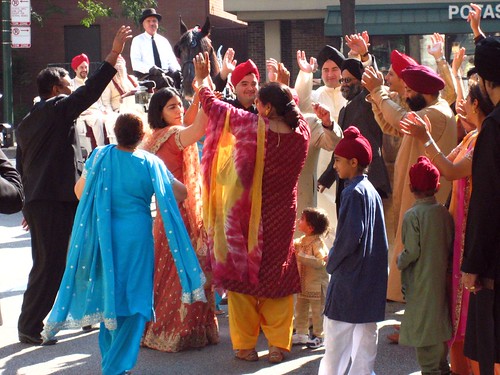
After listening to a concluding talk yesterday about the faith of Jesus which is really the faith that God has in us to respond to Him, this morning I realized that the two categories of people that I find in Romans 1 and 2 are represented in one of Jesus' parables about invitees to a wedding feast. It is found in Matthew 22:1-14 and talks about the problems a king had trying to get people to come to a wedding feast for his son. If you think it strange that someone should have a problem getting people to show up to a great party with lots of free food and even free designer clothes, you are absolutely right. But the problem is actually God's problem and the people are us. Evidently we don't believe that God has a great party to come to, or if we do we don't want to cooperate with His plans and provisions for how to dress for the party. Most of us are just party-poopers. But in this case the consequences for not joining the party is a disconnection from our only source of survival and life itself.

The last half of Romans 1 describes people who, though “they knew God, they did not honor Him as God or give thanks, but they became futile in their speculations, and their foolish heart was darkened.” (Romans 1:21) These are the people who resist and resist the drawing of God in their lives and God is obliged to “turn them over” to the results of their choices. I see the parallel to this class of people in the first group of invitees to the wedding feast illustrated in Jesus' parable.

“He sent his servants to those who had been invited to the banquet to tell them to come, but they refused to come. Then he sent some more servants and said, 'Tell those who have been invited that I have prepared my dinner: My oxen and fattened cattle have been butchered, and everything is ready. Come to the wedding banquet.' But they paid no attention and went off-- one to his field, another to his business. The rest seized his servants, mistreated them and killed them.” (Matthew 22:3-6)

All of these people like those in Romans 1 refused to even respond to the invitation of God to join the party. Even worse, they became violent against those who were inviting them and generally made themselves completely cut off from any friendly connections to the king. They openly rebelled and rejected all overtures of love and relationship.

The second class of invitees are a bit more friendly but inside they have a hidden heart of rebellion as well. These are described throughout the whole chapter of Romans 2 as religious people who claim to be God-followers. Like the second group of people in the parable, they have accepted the invitation and have showed up at the party apparently intending to have a great time exploiting the king's generosity. This is the group that makes many of us squirm a little and began to rationalize about our own behavior and attitudes. It even exposes problems with the long-argued belief held by many of “once saved always saved”. According to Jesus' parable these people were among the “saved”. They were in the wedding feast right along with everyone else and enjoying all the benefits and perks except for the one they didn't want to be bothered with. "But when the king came in to look over the dinner guests, he saw a man there who was not dressed in wedding clothes.” (Matthew 22:11)

It does not say that this man did not have any clothes at all; it only says that he was not dressed in wedding clothes. These wedding clothes were provided free of charge by the king and were designed to show that in this kingdom everyone is equal. No one had to strive to make themselves stand out to be noticed or feel ashamed because they were too poor. After remembering the variety of people who were there and where they had come from it is quite understandable why the king would have such an arrangement for everyone to feel happy and comfortable in each others presence.

After the rebuffs by the first group of invited guests, the king had ordered his servants, “'Go therefore to the main highways, and as many as you find there, invite to the wedding feast.' Those slaves went out into the streets and gathered together all they found, both evil and good; and the wedding hall was filled with dinner guests.” (Matthew 22:9-10) The only qualifications at this point for joining the celebration was to accept the invitation, show up at the party and put on the free royal clothes provided by the Father of the Bridegroom. How much better can it get?

The truth is, it can't get any better than this. Anything more that we might demand is downhill from here and takes away from the joy of the party. That is exactly what Paul is addressing in Romans 2. These are people just like most of us who want to be a part of the party and want to look good before others by comparing ourselves favorably to others in a critical spirit. The real problem is internal and described in verse 8 as selfish ambition. This is the spirit of the man who wanted to wear his own clothes to the wedding feast instead of looking just like everyone else. He wanted to stand out in the crowd and be a cut above all the other riff-raff that showed up at this party, “both evil and good”.

But that's not how the party is arranged. There is no other options for being part of the family of the King. If you want to enjoy the party and celebrate with the Son, you have to accept all of the provisions of the King, not just the ones you prefer. There are good reasons for everything the King has provided, but whether or not we understand the reasons, if we want to be in the banquet we have to follow all the instructions or the natural consequences will have to happen to us as well. Like the man who found himself speechless and then banished to the darkness where there is weeping and deep regrets, we will find that there really is no excuses that will stand up in the light of His presence.

But to my delight I see a third group of people described both in Romans 2 and the parable in Matthew. They are composed of those who realize that though everyone has sinned, with or without the law, all those “who do instinctively the things of the Law, these, not having the Law, are a law to themselves, in that they show the work of the Law written in their hearts.” (Rom. 2:14,15) They are the ones collected from the highways and street-people, all gathered together from wherever they were found both good and evil. They are not of those who were originally invited but found to be “not worthy”.

It is quite interesting to see that being considered “worthy” for the party is not based on being good or evil but on responding to the invitation and then cooperating with the provisions supplied. The first group refused to respond and were therefore lost because they were not worthy. The man who accepted the invitation but refused to become like the king was also found to be unworthy.

We can't get into the kingdom of heaven unless we are willing to become like the King. If we accept the invitation but refuse to become like the King, we are rejecting the faith of Jesus, the faith that God has in us responding to His invitation and provisions to become like Him; we refuse to be transformed by His grace, His kindness that leads us to repentance, and refusing to wear the robe of Christ's righteousness to cover us up completely.

It is an act of faith to accept the righteousness of Jesus and not depend at all on anything we can do to earn God's favor. Faith is what pleases Him (Heb. 11:6), and it is really reflecting His faith. Those who draw back from faith find that God has no pleasure in them (Heb 10:38,39). Luke 17:1-10 reveals how we can have more faith. It is by coming into a relationship with God where we put His interests first and seek to satisfy His heart before seeking our own selfish ambition. That is the condition that creates faith and is the true core of all true intimacy and love-bonds. It is the atmosphere of the kingdom of heaven.

'The wedding is ready, but those who were invited were not worthy. Go therefore to the main highways, and as many as you find there, invite to the wedding feast.'

(next in series)

Sunday, June 03, 2007

Judgment vs. Judgment

Judgment = revealing.

There is a big difference between our judgment and God's judgment.

When we judge, our motives always come from limited and biased perspective tainted with selfishness. So we use judgment of others as a tool to shame them or induce them through force of threat to change.

God does not operate the way we do; He does not use shame, guilt trips, force or intimidation to convert the heart. His motive is always positive and based on attraction through love. His light is revealing of everything opposed to it and that is what real judgment means. His warnings are not given as threats of arbitrary punishments but as reality checks to make us aware of the fatal danger of resisting love and the inevitable consequences of violating natural law.

Our type of judgment is not life-giving. It is self-justifying in nature and seeks to paint ourselves in a better position morally than those we are judging. In doing so it is also self-deceptive in that when we judge others it becomes more difficult to see the faults in ourself. That is why we find it so hard to accept what Paul is saying about those who judge others being guilty of the same sins. Our self-justifying nature strongly objects to such assertions and we protest that in fact we really are not as guilty as those we are judging.

We also seem to believe that our judgments serve the purpose of forcing others to admit their guilt and think this will bring them to repentance. But our judgment does not convey the spirit of kindness so it does not lead to true repentance. We may be able to force confessions of guilt from others by exposing their sins to the light of public knowledge, but instead of softening their hearts with the oil of grace we callous their hearts with more scar tissue from the wounds we inflict on them. Tragically, we do all of this in the name of God and thereby blaspheme and misrepresent Him and further alienate the very ones He is trying to draw to repentance through the riches of His own kindness, tolerance and patience.

Man's judging is always based on false ideas about God that are really reflections of the character of Satan, the accuser. Sin started when Satan accused God of not being kind, tolerant or patient, and when we judge others we take up his litany and join in his lies about God. We believe we are helping God when we try to bring conviction into someone else's life, but in fact we are actually usurping the function of God's Holy Spirit and are acting as an anti-Christ. We bear the name of Christ while utilizing the tools of His arch-enemy.

Paul asks a very perceptive question in Romans 2 verse 3 - “do you suppose that when you pass judgment and do the same that you will escape the judgment of God?” Built into the very nature of our judgment of others is the hidden agenda of avoidance as well as self-justification. (Remember, the original Greek, words for our judgment and God's judgment are different.) Somehow we think, either consciously or subconsciously, that by exposing the faults of others we are going to be able to vindicate ourselves as being righteous and not guilty ourselves. It is a very common occurrence to see people loudly proclaiming the sins of others only to later be exposed as being just as guilty or worse themselves. And yet we continue to believe that that only applies to other's situations and that we are different. That is the power of the deception of human judgment; we always believe that we are the exception and that somehow we will not be found guilty ourselves or that the light of truth can be avoided indefinitely.

But when we begin to truly understand to nature of God's judgment and that it is fundamentally very different than what we are used to thinking about judgment, it will start to become plain that no one can avoid the revealing nature of Light itself. To think that we are not guilty and that Paul was just over-stating the truth to make a point, is to trust that darkness will protect us from ever being exposed by light. It is also to remain in the darkness of misunderstanding of what constitutes light.

When God judges, He offers life and hope in His kindness. His convictions when accepted are empowering and have inherent in them the links to His power so that we can be transformed and saved. God's judgments are gentle but insistent but by necessity become more forceful in their intensity to try to overcome our resistance. They are not forceful in the sense of violating our will but in their desire to win our affections. God's judgments lead us to repentance which is simply a turning around from running away from God. Repentance is a change of heart in our perceptions and attitudes towards God's heart. It is acknowledging that our ways are out of harmony, out of synchronization, with true reality and the unavoidable principles in the universe that reflect God's character.

I think it will do us well to remember how meticulous God was and why, in His instructions for the Old Testament sanctuary to emphasis that no one was to ever attempt to introduce fire that had not been originated by the literal flame of God's presence. This was termed “strange fire”, and to try to bring into God's service a fire (passion) that was originated by humans was “punishable” by death. Many have come to believe that this demonstrates the arbitrary nature of God's “punishments” and vindicates their lies about Him. However, what it does reveal is the radical difference between the truth about what God's passion is like and human perceptions or interpretations of His passion. The nature of God's passion, His fire, His light is described in verse 4 very clearly. It is demonstrated by kindness, tolerance and patience and it is magnetic in nature.

What is even more revealing about the natural results of resisting this critical truth about God is explained in verse 5. Resistance to the truth about God is described as stubbornness and unrepentance. This is very relevant because really is the kindness of God that leads one to repentance, so refusing to believe in the kindness of God leaves one without repentance. The real tragedy is that choosing to believe these lies about God and resisting acceptance of these truths in favor of our common religious assumptions about Him is the very thing that stores up wrath for ourselves that will become self-destructive in the day of full revelation. That is the real truth about “punishment”.

This leads us to challenge our many false assumptions about the “day of judgment” and the “day of wrath” that all the world is warned about. No one will be able to escape that day, but it is extremely important that we receive a correct concept of what that day is really all about. The typical assumptions about the day of judgment are all based on lies about what God is like and how He relates to sinners. The day of judgment is usually viewed with great fear, but fear based on threats of an angry, vengeful God who will use His superior power to crush His enemies and vent His pent-up (human-style) wrath in torturing those who did not previously succumb to His pressure on them and be “converted”. But that kind of fear is based on the brand of fear produced in Satan's kingdom and originates with the enemy of God. To continue to cling to such false concepts of God after He has revealed Himself in a totally different light is to set one's self up to experience the consequences that appear to vindicate those very lies.

But God's judgment is very different in nature from our judgment. God's judgment is better understood in the Gospel of John and his other epistles. God's judgment always is in the context of unaffected love and is revealing of truth. This truth is not just the compilation of correct facts but is a revelation of the hidden things of the heart, the secrets that we harbor in not only knowledge of our personal lives but in our attitudes and beliefs about ourselves and about God. God's judgment is a light that simply reveals to everyone whether we are willing to be brought into harmony with what God has revealed about Himself to our heart, or whether we are still clinging to our resistance of His love and kindness and choose to believe the enemies lies about Him.

Judgment day is therefore a time when nothing will be secret anymore and the natural consequences of every being's choices will come to fulfillment. It is called a day of wrath because this wrath as used in the Bible simply means passion, and that day will be the ultimate revelation of passion, both good and bad. Romans 2 is a strong warning to people who claim to be followers of God but still have the wrong kind of passion influencing their relationships with others. Paul is warning us that we should not believe that our passion, our judgments, our criticisms are reflective of the truth about God.

Moses was not allowed to enter into the Promised Land because he made the mistake of displaying the human kind of passion and wrath while representing God to the world when he struck the rock in anger. We are no less responsible to represent the truth of God to others than was Moses. God is preparing a people made up of anyone who is willing to be transformed by His kindness, tolerance and patience to represent Him correctly before a world of people who only know lies about Him. He plans to reveal His real righteousness to the world in advance of the final day of judgment - “the day of wrath and revelation of the righteous judgment of God.”

(next in series)

Saturday, June 02, 2007

Inhibitions to Celebration

Now all the tax collectors and the sinners were coming near Him to listen to Him. Both the Pharisees and the scribes began to grumble, saying, "This man receives sinners and eats with them."

So He told them this parable, saying, "What man among you, if he has a hundred sheep and has lost one of them, does not leave the ninety-nine in the open pasture and go after the one which is lost until he finds it? "When he has found it, he lays it on his shoulders, rejoicing. "And when he comes home, he calls together his friends and his neighbors, saying to them, 'Rejoice with me, for I have found my sheep which was lost!' "I tell you that in the same way, there will be more joy in heaven over one sinner who repents than over ninety-nine righteous persons who need no repentance.

"Or what woman, if she has ten silver coins and loses one coin, does not light a lamp and sweep the house and search carefully until she finds it? "When she has found it, she calls together her friends and neighbors, saying, 'Rejoice with me, for I have found the coin which I had lost!' "In the same way, I tell you, there is joy in the presence of the angels of God over one sinner who repents."

And He said, "A man had two sons.... "So he got up and came to his father. But while he was still a long way off, his father saw him and felt compassion for him, and ran and embraced him and kissed him. "And the son said to him, 'Father, I have sinned against heaven and in your sight; I am no longer worthy to be called your son.' "But the father said to his slaves, 'Quickly bring out the best robe and put it on him, and put a ring on his hand and sandals on his feet; and bring the fattened calf, kill it, and let us eat and celebrate; for this son of mine was dead and has come to life again; he was lost and has been found.' And they began to celebrate. "Now his older son... said to his father, 'Look! For so many years I have been serving you and I have never neglected a command of yours; and yet you have never given me a young goat, so that I might celebrate with my friends; but when this son of yours came, who has devoured your wealth with prostitutes, you killed the fattened calf for him.' "And he said to him, 'Son, you have always been with me, and all that is mine is yours. 'But we had to celebrate and rejoice, for this brother of yours was dead and has begun to live, and was lost and has been found.'" (Luke 15:1-32)

I have no stomach right now to launch into a theological propounding of the assumptions to be drawn from this much-studied text – at least not from the intellectual side stripped of the real heart functions illustrated in these stories. Right now I want to internalize what my heart wants to experience that is so well expressed by some of these key phrases and words that for most of my life have been almost totally foreign to me.

I started thinking this morning about reactions that I have observed and experienced in relationship to different events involving “good news” that someone had, something that they were excited about and wanted to share their excitement with others. As I sat down to write out my thoughts and explore them further one of my daughters asked me what I was writing about so I shared with her what I was about to unpack. She then began sharing with me her perspective and thoughts about this which I must give credit to for much of what I am sharing.

Let me back up and explain what I shared with her as we started discussing this idea of celebrating with someone else. A day or two ago I mentioned to someone special in my life that I was talking to on the phone that I was repairing my boat. In my heart I was hoping that they would share my excitement at the prospect that soon we would be able to have it available to make more great memories together having fun on the lake with friends. But instead they reminded me of their disappointment in me that I had not done it much sooner so they could enjoy it over Memorial day weekend with their friends.

I realize that it would be completely useless to try to justify myself or rehearse my explanations as to why I wan not able to do it sooner due to various financial and time restrictions. It was simply viewed as a personal slight to them, a disregard for their desires, that I did not care about them as much as I claimed. This caused me a little internal pain, but I refused to allow it to cloud my affection for them. It was more that I realized we had missed yet another opportunity for bonding through the function of celebration. It also reminded me painfully that this pattern has been a well-recognized habit in my own life as I have missed thousands of opportunities to enter into other people's joy without reservation, self-pity or jealousy.

The second thing that I related to my daughter this morning was about her own experience she is having right now. We drove to Michigan last night so that she could pick up the car that she had put a deposit on about a week ago. She has been so excited about finding this car for such a good price. It is in nearly mint condition, well taken care of by its owner and is one of the best brands on the market. It fits her personality perfectly and after we picked it up and drove to another daughter's house to spend the night she did not want to quite driving it she was enjoying it so much. All evening she could not contain her excitement over her new “toy” as the little kid in her reveled in delight over her new car. I have accompanied her over the past few weeks on some of her various forays to find a car. We have been to a big car auction and have checked out cars from ads in the paper. She was determined to not accept anything less than what met her quite high expectations in a car that baffled most of the people around her. But I wanted to respect her individuality so I encouraged her to keep looking until she was satisfied. When she found this car she was not only happy with the car but was thrilled that the owner was a person that she could connect with as well on a deeper level than strictly business. The lady had come over from Czechoslovakia to this country to follow her desire for adventure and was living out her dream. She had been very happy with this car and was even quite sad to see it go, but she was also looking forward to getting a brand new car that was even better whenever she could make up her mind which one to choose.

As I went through these events with my daughter and observed her bubbling excitement over her new purchase, I have to admit that a little jealousy stirred up inside of me. I tried to check it at once and not allow it to spoil her enthusiasm but I was still aware of it and maybe even allowed it to influence my jokes with her about her new car. Internally I struggled as to how to relate to this negative emotion without just trying to repress it. As I did so I realized that it has roots far back in my life when it was trained into my psyche that celebration was not acceptable and joy was virtually an unknown in my heart. I have not really learned by experience how to enter into joy with other people uninhibitedly. I feel cheated in this area and even jealous of people who can connect with others in celebrating their joys as well as sharing with them in their sorrows or pain. That is what I want to be like and I am impatient to get there.

Anyway, I shared the two events in brief with my daughter this morning and the emotions that they evoked in me and we discussed them for a few minutes. I told her that I want to learn how to fully share her elation with her as much as I can so I can reinforce and amplify her joy. This is the bonding process that takes place in true community and since the family God has put together with our lives is the community that I live in I want to better relate to them and learn to celebrate with them. “Learn” is the operative word here, and while my heart certainly would love to celebrate on many occasions my mind is still so full of fear and inhibitions that it often blocks the free expression of my heart's desires.

As we talked about these things a few root ideas began to condense in my mind. One is that self-pity spoils joy-sharing. That is usually present due to a lack of maturity more than a sense of malice or ill-will. How often opportunities to celebrate with others are missed or contaminated by my own self-pity that “good things only happen to other people”. This is a symptom of negative thinking which is a malignant disease that afflicts too many of us.

My daughter shared with me that the way she relates to this problem is to realize that she has a choice to make; she can indulge in self-pity about bad things that have happened to her (and she certainly has plenty of that to reflect on) or she can view them as lessons to contrast with the good things in her life so that she can appreciate them even more by comparison. She reminded me that stuff happens to give me a better perspective of who I am if I am willing to view it that way. She has chosen to look at life through positive lenses in spite of the fact that much of her life has been trashed by many people through whom she should have been nurtured and protected. Then to add insult to injury along come people who think that because of her cheerful, sweet disposition that she must have had it easy all of her life and that she could not possibly relate to anyone else's problems effectively. That is a real source of pain for her sensitive heart, but to me reveals a special beauty in the very unique qualities that God has implanted in her.

Another block to celebrating and rejoicing with others is the problem of jealousy. Jealousy poisons my ability to freely enter into celebration. Jealousy is a very caustic form of selfishness that tears apart emotional bonds and destroys love and affection. I seldom admit to falling victim to this vice but it influences more of my relationships that I may care to imagine. Together jealousy and self-pity are very effective inhibitors that severely limit the depth of my attachments to those that I want to love and cherish. I want to eradicate these selfish traits from my life and live more fully in the atmosphere of heaven described in the above passage where it is just a given assumption that “we had to celebrate and rejoice!”

Emotions are symptoms of the heart. Suppressing emotions represses the heart and makes it impossible for me to freely live from my heart. If I have negative emotions that are causing problems in my life I should not hide from them or try to reinforce them by gathering sympathy for them but I must acknowledge them for what they are, trace them back to the root faults underlying them and then receive the freedom that truth can bring to my soul. That truth is not primarily intellectual though that may be involved in it, but it is a truth that lies at the very foundation of my perception of my identity and my value. When that truth is accepted deep in my experiential memories and pours the healing oil of grace into my wounded, lacerated heart-memories, and when I can receive the fact that God, along with some of His children, is willing and maybe even eager to love me and be with me no matter what I am experiencing, and that that love is not something that I have to earn, then I will be more free and uninhibited to celebrate and rejoice with others and I will enjoy having them do the same with me.

Friday, June 01, 2007

Contrasting Trio in Romans 2

I was not intending to write anything this morning due to lack of time but I cannot allow this to slip by and be potentially forgotten. I will have to put the various pieces together sometime and see what fascinating picture emerges more clearly.

It seems to me like there might be an important linkage between the trio of attributes in Romans 2:4 describing what we do not take very seriously about God with the directly contrasting attributes produced within ourselves as a result described in verse 8. It does not seem to be a stretch to see a direct contrast between each pair when they are put side by side.

Kindness vs. unrighteousness.

Tolerance vs. wrath.

Patience vs. indignation.

The first trio describes the things about God that when properly appreciated draw us to Him and turn us (repentance) from running away or resisting Him. In a very real sense, when we choose to believe these things about God we obey them by responding to them/Him.

Conversely, when we choose to cling to our lies about God and what He is like we, in fact, obey those lies by becoming them ourselves – by beholding we become changed. This puts a whole new dimension on the word “obey”!

I also find it enlightening in this parallel contrasting trio that kindness is the main description used opposite unrighteousness. I have wondered for years about the word righteousness and it seems that in this context Paul is proposing that kindness is possibly the most pronounced hallmark of that idea. We have heard the word righteousness all of our lives but I suspect it really has not had much real substance in our understanding other than just a very good filler word used in religious phrases. This word “kindness” puts a much more definitive face on the idea of righteousness that we can relate to on a heart level.

I also find it interesting that tolerance is found opposite wrath. But when I think about situations where wrath is displayed invariably there is a lack of tolerance so this really does make sense. So too with patience and indignation. I can't think of a person who portrays indignation who is viewed as being patient. We generally say that that person has run out of patience at that point. We also claim that when God “destroys” sinners He too has run out of patience. Hmmmm.

What do you think?

(next in series)

Thursday, May 31, 2007

Supposed Escape

I must write this down before it escapes me so I can explore it more fully later.

Attachment bonds to things above attachments to people.

Attachments to people above intimacy with God.

Today I looked at Rom. 2:3 “Do you suppose... that you will escape the judgment of God?” This is directed at all of us looking for excuses for our critical words and attitudes. Paul is putting his finger on an underlying supposition that is not apparent to us or it would not need to be exposed. So what is the ingredients of this supposition?

The following verses lay out what composes this supposition. Thinking “lightly” is the first element listed, “not knowing” is the second. And then more descriptive words are used like “stubbornness” and “unrepentant”, “selfishly ambitious” and not obeying the truth but obeying unrighteousness, wrath and indignation.

Now that is very fascinating – obeying wrath and indignation. There certainly is a whole lot to unpack there. That sounds very much like our typical false picture of God; full of wrath and indignation. So when we cling to these false ideas about God we are obeying these false pictures of God mirrored from our soul and displayed in the way we treat others with our critical, condemning spirit.

I need to make use of my daytime hours while it is not raining to get some much-needed repairs done so I will come back to this soon.

(next in series)